This is a rich, tonkotsu soy–based Tokushima ramen, deep and bold in flavor. In a place like Tokushima, a relatively closed and challenging market, this shop played an important role in bringing Tokushima ramen to a national audience. They truly deserve credit for that achievement. Our tastes naturally evolve over time, and so does their ramen. Over the years, they’ve continued to experiment, refine, and try new approaches, rather than standing still. Back around 2007, a bowl cost about 500 yen. Today it’s around 750 yen — and even now, it still feels reasonably priced. It’s a bowl that reflects both the history of Tokushima ramen and its ongoing evolution, and a place worth visiting if you want to understand where this local style came from and how it has grown.
Overview
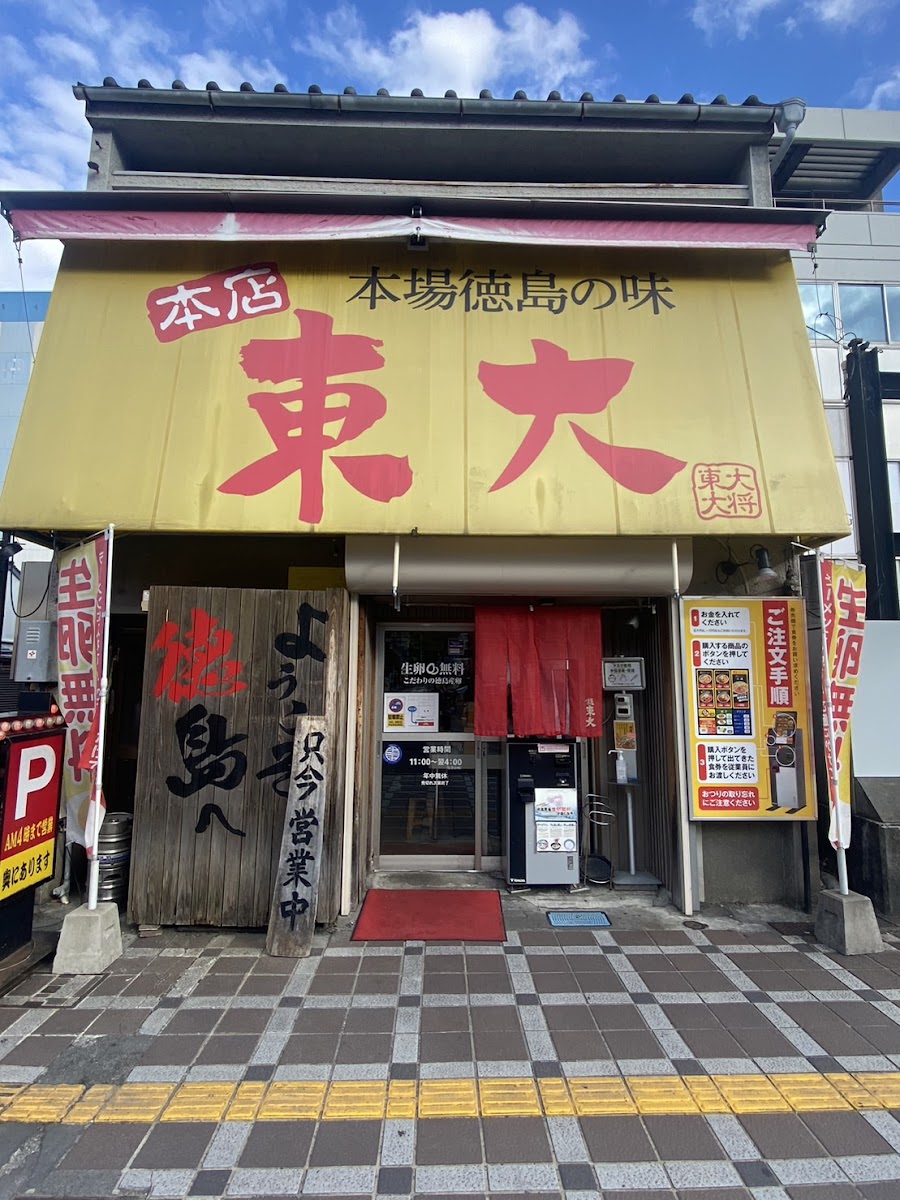
Tucked into a lively corner of Tokushima, at 1 Chome-36-36 Omichi, Tokushima, 770-0923, Japan, Rāmen Tōdai Ōmichi Honten is the kind of ramen shop you hear about long before you see it. I first visited on a rainy weekday afternoon, expecting a quick bowl and a quiet seat. Instead, I found a near-full counter, a steady rhythm of slurping, and the unmistakable aroma of rich pork broth simmering behind the scenes. That first visit turned into several more over the years, and each time the experience felt grounded in the same consistency and care.
Tokushima ramen has its own identity, and this shop represents it proudly. According to the Japan National Tourism Organization, Tokushima-style ramen is known for its dark soy-based tonkotsu broth, thin noodles, and sweet-salty slices of pork belly. Here, that formula is executed with precision. The broth arrives almost opaque, topped with tender chāshū, green onions, and often a raw egg that melts gently into the soup. The flavor profile leans bold yet balanced. The soy sauce base gives depth, while the pork bones provide body and natural sweetness.
What stands out most is the preparation process. On one of my visits, I sat close enough to the open kitchen to watch the staff blanch noodles for precisely timed intervals-usually under a minute for the thin, straight variety typical of Tokushima. Timing matters. Overcooked noodles lose their bite, while undercooked ones fail to absorb the broth properly. The cooks here move with calm efficiency, adjusting heat levels and tasting the broth periodically. It’s a simple setup, but the discipline behind it is clear.
The menu is focused rather than overwhelming. You’ll find variations of their signature ramen, including extra pork slices, added egg, or larger portions. There are also rice bowls that pair surprisingly well with the soup. In fact, locals often order white rice alongside ramen, dipping it lightly into the broth. It may sound unconventional to some visitors, yet in Tokushima it’s part of the culture. Reviews from both Japanese diners and international travelers frequently mention this combination as a highlight.
From a culinary perspective, the richness of the broth reflects a broader ramen tradition. Food scholars such as George Solt, author of The Untold History of Ramen, explain how regional ramen styles developed through local tastes and economic factors. Tokushima’s sweeter soy blend is one example of how community preference shapes flavor. Eating here feels like tasting that history firsthand rather than reading about it in a book.
The atmosphere remains casual and welcoming. Seating is mostly counter-style with a few tables, encouraging quick turnover during busy hours. Service is efficient, though not overly chatty. That’s typical for many ramen shops across Japan. Orders are taken swiftly, and bowls arrive steaming within minutes. Even during peak dinner times, the flow rarely stalls.
Hygiene and cleanliness are handled with visible care. Utensils are neatly arranged, and condiments-garlic, chili paste, and sesame-are replenished regularly. While I don’t have access to official inspection scores, the overall maintenance and steady stream of repeat customers suggest strong operational standards. It’s always wise for travelers to check updated reviews before visiting, especially during holidays when wait times can extend outside.
Location plays a role in its appeal. Being situated in central Tokushima makes it accessible for both locals and tourists exploring the city. After visiting nearby shopping streets or cultural spots, stopping in for a bowl feels natural. The shop’s reputation has grown beyond the neighborhood, yet it still feels authentic rather than commercialized.
Every time I return, I notice the same thing: people finishing their bowls completely, sometimes even lifting them to sip the last drops of broth. That quiet gesture says more than any rating system. The balance of soy sauce, pork richness, and springy noodles creates a satisfying depth that lingers long after you leave. In a country filled with exceptional ramen shops, this one holds its ground by staying true to its regional roots and delivering flavor with unwavering consistency.
Good to know
Service options
✓ Delivery ✓ Dine-inPopular for
✓ Lunch ✓ Dinner ✓ Solo diningAccessibility
✓ Wheelchair-accessible car park ✓ Wheelchair-accessible entrance ✓ Wheelchair-accessible seatingOfferings
✓ Alcohol ✓ Beer ✓ Late-night food ✓ Quick biteDining options
✓ Lunch ✓ DinnerAmenities
✓ ToiletCrowd
✓ Tourists ✓ University studentsPlanning
✓ Accepts reservationsPayments
✓ Credit cards ✓ PayPay ✓ Transit IC cards ✓ au PAY ✓ dBarai ✓ Rakuten Pay ✓ V-Money ✓ Credit cardsParking
✓ Free parking lot ✓ On-site parking ✓ ParkingPhotos
Location
Reviews
Free rice, eggs, and garlic in this economy?? Absolutely amazing. No frills restaurant with greasy, rich ramen, but that's what you come here for. I ordered the Extra Meat Thick Soup Ramen, regular size, for 1050¥. It's a bit heavy and greasy as expected, with thin firm noodles. The meat is salty and soaked in flavor. You can choose to dip it in raw egg, make a Tamago-Kake Gohan (raw rice and soy sauce on rice), or just dump it all in together. You choose how to eat it, but you will surely leave fatter and full.
Saw the recommendation from hostel so come to take a bite. ¥750 (April 2025) for regular ramen. And I am glad I choose this option because they also provide free raw eggs and free rice on unconditional portion. As a decent person I will only consume 1 egg and 1 bowl of rice please. The ramen broth is thick and very thick and so thick in taste, I think some macho man would like it to kick off their taste bud. And there is only a smaller piece of meat, so my main meal today is noodle plus rice. There is instruction to teach you the steps on taking the ramen. And put the rice after for absorbing all its flavor. I just followed and came out in a full belly. I would recommend for visitors would like to experiment new things, and has a belly to take it. Just don’t order too much.
The definitive Tokushima Ramen Fresh eggs and rice are complimentary Ramen is robust tasting Queuing on a hit summer noon is no joke
Super tasty and cheap. Room is not big. Super Tiny. There is a box of free heat packs for customers outside. Love this place. Ramen is not too thick, and free eggs and rice will be served all the time.
Come try Tokushima Ramen here during your visit! It's a small, authentic, no-frills ramen shop. Slurp your bowl, eat your rice, drink your beer, and go home to relax. I was happy I came here in particular because the staff member helped me order on the machine because the sun was blasting the screen, and I could barely see anything on it. This shop offers garlic, raw eggs (which you should crack onto your ramen bowl) and plain white rice sides for free. The Tokushima ramen broth is extremely heavy and packed with fatty flavor. It was so delicious, I almost finished up all of the broth, and I had to slowly waddle my way back to my hotel afterwards.
Ramen here was thick and delicious. But, the best part of ramen here was unlimited raw egg supply. We ordered extra rice and poured the extra soup from ramen into the rice and ate with the raw egg. Each of us used uo the 3 raw eggs on our bsr table. Wow. It was soooooo delicious. We really salute the generosity of the owner. 5 stars Total bill for 2 persons' dinner at 1600 yen
I’ve ordered Ramen with extra meat, which costs 950 Yen—$6.7 by card payment. Tender meats but the soup was so salty